

Think back to the last time you or a loved one was a patient in a hospital or healthcare facility....
Thankful For... Hospital Rating Systems

There was a time not too long ago that getting medical treatment meant having little choice in which hospital would provide the care and even less information about how that hospital measured up to their local, state, or national peers. Today, we have more choice in where to go for treatment, but more than anything, we have far more information about how each hospital rates on measures ranging from patient satisfaction, procedures outcomes, cleanliness, and financial transparency. While access to this data should be seen as a basic patient right, we can still take a moment and reflect on how grateful we are that we have this window into quality of care. In today's post, we'll look at the most impactful hospital rating systems and how you can make the most sense of their scores.
Here are the major hospital scoring systems for the United States.
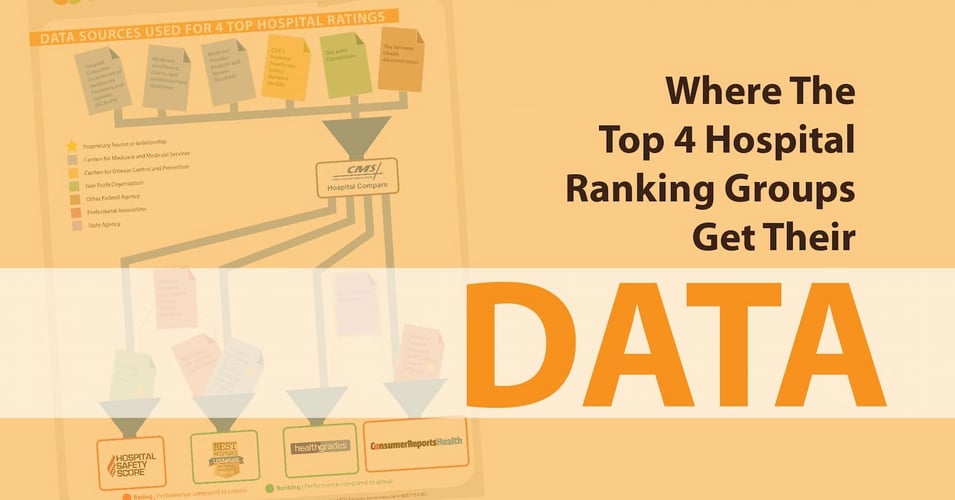
- CMS Care Compare (Medicare.gov): The federal government's official tool, giving hospitals an overall 1–5 star rating based on mortality, safety, readmissions, patient experience, and timeliness of care, and covering nearly all hospitals that accept Medicare. Data: Medicare claims for mortality and readmissions, quality measures hospitals report to CMS, CDC infection data (NHSN), and HCAHPS patient surveys.
- Leapfrog Hospital Safety Grade: A nonprofit that assigns A–F letter grades twice a year, focused on preventing errors, infections, and injuries. Data: Leapfrog's voluntary Hospital Survey (staffing, medication safety, safe practices), CMS data on infections, complications, and patient experience, and the American Hospital Association (AHA) Annual Survey to fill gaps for hospitals that skip Leapfrog's survey.
- U.S. News & World Report Best Hospitals: Annual rankings by specialty and common procedures, plus an "Honor Roll" of top overall hospitals. Data: Medicare claims for outcomes and patient volume, the AHA Annual Survey for staffing and technology, HCAHPS, external recognitions (National Cancer Institute designation, nursing Magnet status), clinical registry data such as Society of Thoracic Surgeons ratings, and a physician opinion survey.
- Healthgrades: A commercial site that rates hospitals on clinical outcomes for specific conditions and procedures, issues awards like "America's 50 Best Hospitals," and includes physician ratings and patient reviews. Data: Mainly Medicare inpatient claims for risk-adjusted mortality and complication rates, all-payer data from states that release it, and HCAHPS.
- Newsweek World's Best Hospitals: Annual international rankings, made with Statista, covering hospitals in many countries. Data: An online survey of doctors, hospital managers, and other health professionals, public quality data from each country (CMS data in the US), patient experience surveys such as HCAHPS, and a hospital-submitted survey on patient-reported outcomes.
- The Joint Commission: An accreditation body rather than a ratings site; its Quality Check tool shows whether a hospital is accredited and holds specialty certifications, such as stroke centers. Data: Unannounced on-site inspections, reviews of hospital policies and records against its standards, and performance data hospitals submit to it.
- Lown Institute Hospitals Index: A nonprofit ranking that weighs clinical outcomes alongside health equity, avoidance of overuse, community benefit, and pay equity. Data: Medicare claims for outcomes and overuse of low-value care, IRS Form 990 tax filings and CMS cost reports for community spending and executive pay, HCAHPS, and Census data on community demographics.
- HCAHPS patient surveys: Standardized national surveys of patient experience (communication, cleanliness, noise, and so on), whose results appear on Care Compare and feed into most other ratings. Data: Surveys of a random sample of adult patients sent by mail, phone, or web between 2 days and 6 weeks after discharge, run by approved vendors and adjusted for patient mix.
- State health department report cards: Many states publish their own quality data, often on specific procedures or infection rates, such as New York's cardiac surgery reports or California's hospital quality data. Data: State hospital discharge databases covering all insurers, mandatory clinical registries, and state-required infection reports.
We live in a time of data overload, with far more access to granular data than ever before. Collecting and analyzing the data can be very overwhelming for the layperson, especially if they are facing a medical concern for themselves or a loved one. In those moments, we are grateful that there are organizations that filter and assess that data and present it to us, the consumers, in a way that is easy to access and understand. While it is up to us to weigh the merits of each hospital scoring system, a lot of the work has been already done for us, leaving us more energy and attention to spend on caregiving. That's something to be thankful for.