
At any given time, nurses in various health systems in are going on strike to put pressure on their...
International Nurses' Day: The Legacy of Florence Nightengale
Erica Mitchell
3
min. read
International Nurses' Day: The Legacy of Florence Nightengale
6:12
Nurses are truly the face of healthcare. From a short visit to a clinic to an extensive stay in a hospital, it is the almost 30 million nurses worldwide who provide the daily care, comfort, and support that help patients and their loved ones endure some of the hardest days of their lives. Today, May 12, is set aside to recognize nurses and their integral role in healthcare (they make up over 50% of U.S. healthcare workers). This day was chosen because it is the birthdate of a woman whose work set the foundation for modern nursing: Florence Nightingale. As we celebrate both International Nurses Day and Florence Nightingale, let’s learn about the work that led to today’s nursing profession.
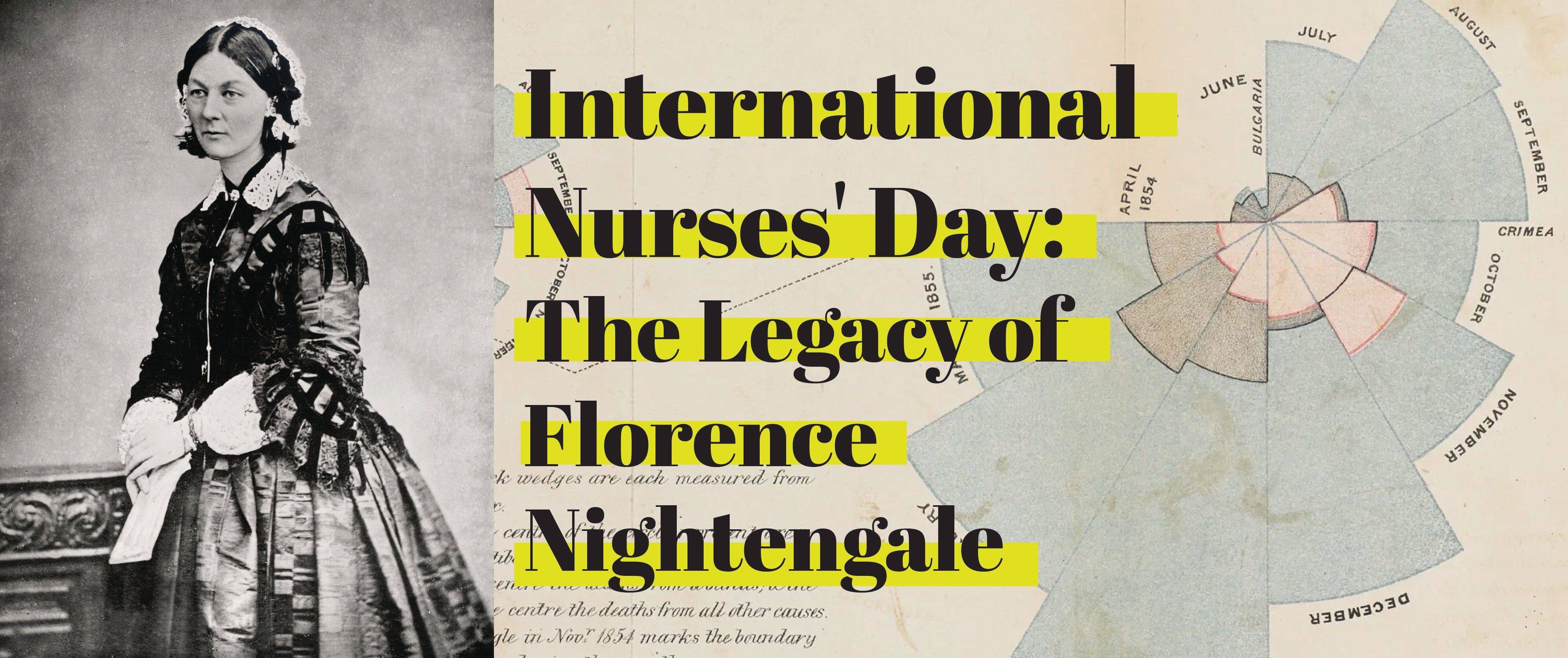
Let’s start with Florence Nightingale, the “lady with the lamp.” While caregivers dedicated to the sick had existed for millennia before Nightingale's work in the mid-1800s, it was her work that created the concept of the professionally skilled nurse. Even though she was born into a family of means, young Florence pursued nursing training, traveling from her home in England to Germany in 1851 and immediately putting her skills to use during the Crimean War. Her mastery and leadership abilities led to her appointment as Superintendent of Female Nurses in the Hospitals in the East, taking her to the squalid conditions of Constantinople (today’s Istanbul). She was horrified by the filthy conditions of the facilities, where there was a shocking lack of hygiene (which is saying a lot in those days), and where more patients died from disease and infection than from battle wounds. It took time, along with a massive influx of patients and a lack of staff, for her male colleagues to accept her help, but ultimately her efforts led to improved sanitation, food preparation, laundering, and public awareness of the needs of patients. It was during this period that she became known as “the lady with the lamp,” as she walked among the beds at night to check on patients and offer comfort.
Nightingale's efforts to bring attention to the suffering of the wounded due to insufficient resources and staffing proved to be a life’s work, with challenges coming not just from medical practice but also from public acceptance. Perhaps some modern female nurses can relate to how she was described by one of the wealthy patrons whom she entreated for support: “She does not appear to be amiable in ordinary intercourse with her equals or supervisors. She likes to govern, and bestows all her tenderness upon those who depend on her.” But no one could deny her leadership and administrative skills. She revolutionized record-keeping and statistics, analyzing data and presenting it in a compelling visual format, earning her recognition as the first female member elected to the Royal Statistical Society. (Look at her beautifully data-rich infographic here.)
Perhaps her most significant legacy is the establishment of nurse training schools, whose graduates would take her methods throughout Britain and the world. Her ideas about nutrition, air circulation, sanitation, hygiene, and the mental health of patients helped revolutionize medical care and set the stage for modern nursing.
Since Nightingale’s time, nursing has continued to change alongside medical and technical discoveries and innovations. Nurses provide far more than bedside comfort and care, becoming practitioners in intensive care, infection prevention, surgery, public health, research, education, and leadership. There are now many levels of nursing professionals, from entry-level nursing assistants to registered nurses and advanced practice nurses. Nurses can specialize in critical care, pediatrics, emergency medicine, psychiatric care, or oncology, just to name a few fields. Nursing is a profession accessible to a wide range of demographics worldwide and, with demand at an all-time high, provides a level of job security that is hard to find today.
Just as Florence Nightingale faced challenges, so too do modern nurses. Every year there are nursing strikes somewhere in the United States, with nurses’ unions fighting to ensure that working hours, compensation, and support meet the needs of these critical healthcare workers. Nursing is also a physically and emotionally draining profession, with high stress and long hours leading to higher rates of burnout and turnover than many other professions. While nurses around the world face similar difficulties, some countries have policies and programs that support nurses in maintaining healthier work-life balances, including better staff-to-patient ratios. However, the United States continues to be a popular destination for internationally trained nurses to relocate, with 51% of new international certifications coming from the Philippines, along with growing numbers from Kenya, Nigeria, and Ghana. These skilled workers help fill much-needed positions in the U.S., especially in hospitals.
While nurses are responsible for medications, monitoring, documentation, and countless clinical tasks, their impact on patients often extends far beyond medical care. Nurses are frequently the people who notice subtle changes first, whether it is a shift in breathing, confusion, pain levels, or emotional distress. They spend more time with patients than almost any other healthcare professional, allowing them to become educators, advocates, and a steady source of reassurance during frightening or uncertain moments. For many patients and families, a nurse is the person who explains complicated information in understandable terms, offers comfort during long nights, or simply makes them feel seen and heard. Studies consistently show that nurses are among the most trusted professionals in the world, and research has linked strong nurse staffing and engagement to improved patient safety and outcomes. In many ways, the compassion and vigilance Florence Nightingale championed more than 150 years ago remain at the heart of nursing today.