![EOScu Logo - Dark - Outlined [07182023]-01](https://blog.eoscu.com/hubfs/Eoscu_June2024/Images/EOScu%20Logo%20-%20Dark%20-%20Outlined%20%5B07182023%5D-01.svg)


After more than a year of a global pandemic, we can all justify a bit of flu fatigue. We've been so...
The 3 Cs of Vaccine Hesitancy
Erica Mitchell
3
min. read
The 3 Cs of Vaccine Hesitancy
5:39
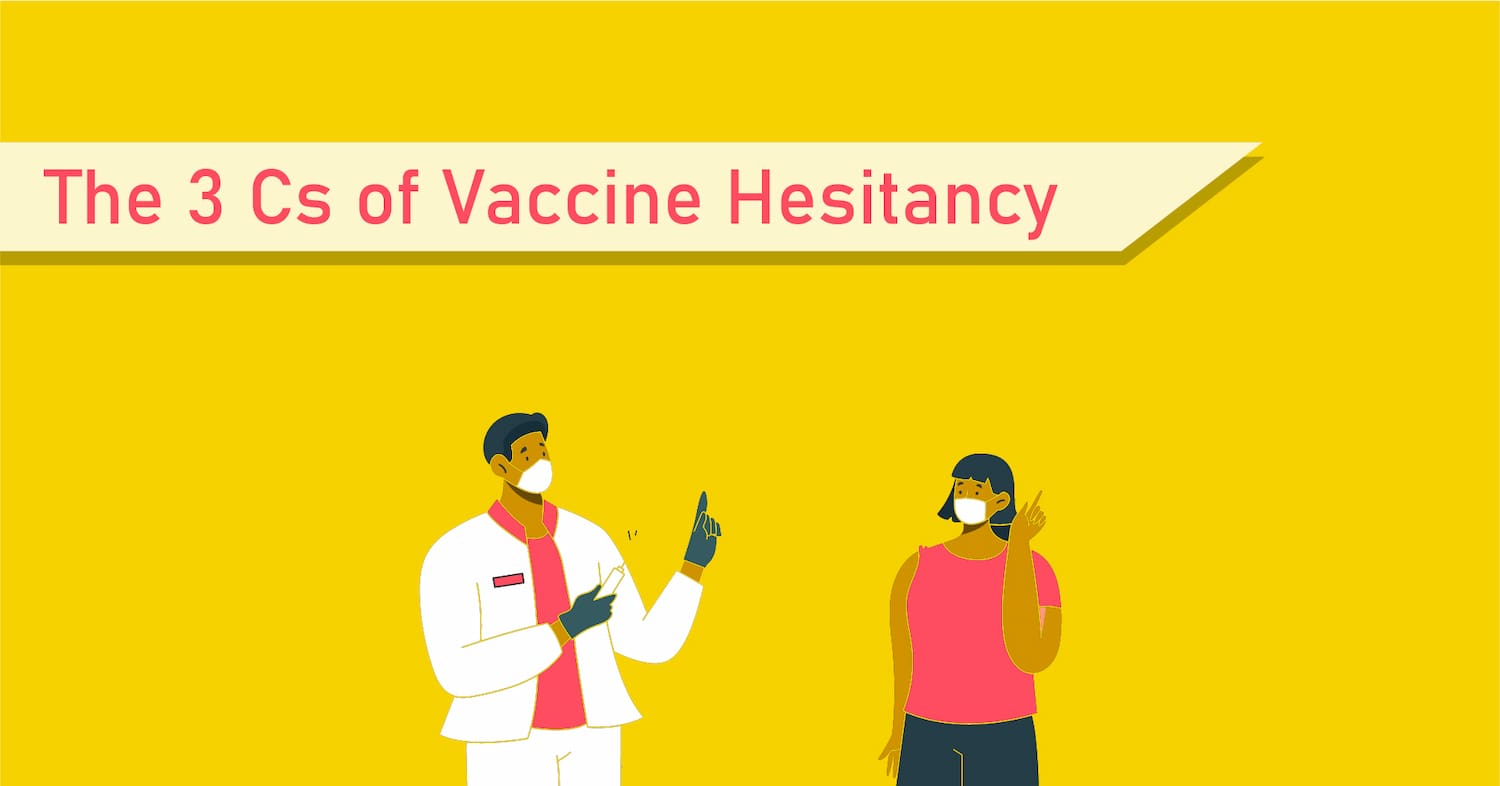
Those of us who get our flu shots, COVID-19 boosters and other appropriate vaccines may often wonder why everyone doesn't get the available vaccines for themselves or their children. Vaccines don't often cost the patient much, if anything, they are effective, and virtually painless. Some of us may struggle with friends and loved ones who do not see vaccines the same way we do, not knowing how to approach the conversation that might convince them to understand the importance of immunization. This conversation has never been more important. Childhood vaccine rates are going down, taking us below the community immunity threshold for preventable diseases such as measles in many regions. Dropping the flu vaccine requirement for the US Armed Forces resulted in a drop from 100% to 45%, triggering the biggest flu outbreak in decades and even one death (and resulting in the reinstatement of the flu vaccine requirement). So what can we do? One way to prepare for "the vaccine conversation" is to consider what epidemiologists call The 3 Cs of Vaccine Hesitancy: Complacency, Confidence, and Convenience.
Psychologists and counselors recommend approaching vaccine hesitancy with compassion and an open-mind. The first step is to hear out the person's concerns, and allow them to share their thoughts in a non-confrontational way. Once you have a feel for where their concerns are coming from, you can start to provide some resources and stories according to one of the 3 Cs.
Complacency | I just haven't gotten around to it. I've been careful.
This C applies both to adults deciding whether to get their own immunizations (like flu, shingles, and other routine adult vaccines) and to parents deciding whether to vaccinate their children. When people say they haven't had time, or that they're not worried, what they're often saying is that they don't believe they (or their child) are truly at risk. Adults may feel that staying generally healthy, washing their hands, and avoiding sick people is protection enough. Parents may feel the same way about their children, especially if the child seems healthy and diseases like measles or whooping cough feel like things from the past. But complacency can be costly: flu can be serious even in healthy adults, shingles risk increases with age, and childhood diseases that vaccines prevent can still circulate and cause real harm, especially since not everyone around a child is vaccinated. Waiting "until it feels urgent" often means waiting until after an exposure has already happened.
Confidence | They haven't been tested enough. They're not necessary. They won't really protect me/my child. I don't trust the information I hear about vaccines.
Some people question how thoroughly certain vaccines have been studied, especially newer ones like the shingles vaccine or updated flu formulations. Parents may worry about the number of vaccines on the childhood schedule, whether they're truly necessary, or whether side effects outweigh the benefit of preventing diseases they've never seen firsthand. For these individuals, it helps to acknowledge that these are legitimate questions with solid answers. Share information about the decades of safety monitoring behind routine vaccines, and the surveillance systems that continue tracking safety after approval. For childhood vaccines, it can help to explain why the schedule is timed the way it is, and what happens to community protection when vaccination rates drop, diseases like measles can and do come back. For flu and shingles, sharing data on how vaccination reduces severity of illness and hospitalization, even when it doesn't guarantee zero risk of infection, can reframe the conversation around what the vaccine is actually meant to do.
Convenience | I can't get time off work. My kid's already stressed about needles. Scheduling is a hassle. I don't like setting up appointments. I can't get the scheduling app to work.
For adults, missing work or finding time in a busy schedule is a real barrier. Helping someone find a nearby pharmacy, an evening or weekend clinic time, or simply offering to go with them can remove the biggest obstacle. For parents, convenience might mean coordinating vaccines with a school physical, finding a clinic that handles multiple kids at once, or working around a child's anxiety about shots. Practical tips, like scheduling for a time when mild side effects (arm soreness, mild fatigue, low fever) won't disrupt a school day or work shift, can make a big difference. Reassuring people that side effects, when they occur, are typically mild and short-lived can also lower the mental barrier to just getting it scheduled.
There is a possible fourth C that we did not discuss in today's post: Conspiracy. It just may be that your friend or loved one has deep-seated beliefs that lead them to mistrust science and public figures. Counselors and psychologists urge us to remain in these people's lives but not bombard them with more and more facts and figures. They suggested telling personal stories about ourselves or people they know, but overall remaining available for discussions. It is important for us to protect our own mental and physical health by establishing boundaries with those who refuse to get the vaccine, while still remaining as a lifeline should they change their minds.
Are there any approaches to vaccine hesitancy that you have used with success? Share them below!